

What are the 7 Natural Wonders of the World: History, Location & What Travelers Should Know
Some landmarks are impressive because of their size. Others stand out because of their age, engineering, cultural importance, or the stories connected to them.
The New 7 Wonders of the World bring together seven famous sites across Asia, Europe, the Middle East, and the Americas. The list was announced in Lisbon on July 7, 2007, following a worldwide public voting campaign. The seven were announced in no particular ranking.
They include ancient archaeological sites, historic architecture, a monumental defensive system, and a famous modern statue.
But knowing the names is only the beginning. Each wonder has a very different history and offers a completely different travel experience.
Here’s a closer look at the 7 Wonders of the World, where to find them, why they matter, and what travelers should know before planning a visit.
1. Great Wall of China — China
Location: China
Type: Historic defensive system
Best known for: Its enormous scale and centuries of construction
The Great Wall of China isn’t a single wall built at one time. It is an extensive network of walls, fortifications, watchtowers, passes, and other defensive structures built and rebuilt across different periods of Chinese history.
UNESCO explains that sections of earlier fortifications were connected under Qin Shi Huang around the 3rd century BC, while construction and rebuilding continued through later dynasties, including the Ming dynasty from 1368 to 1644. The complete UNESCO property stretches for more than 20,000 kilometers.
UNESCO Great Wall of China Overview
That scale is part of what makes the Great Wall so fascinating.
What makes it special?
The wall follows mountains, ridges, valleys, and other natural features rather than forming one straight route. Along the way are watchtowers and fortifications that show how the defensive system developed over centuries.
For travelers, this also means there isn’t one single “Great Wall experience.”
Different sections have different landscapes, visitor facilities, and levels of development.
Travel tip
If you’re planning to visit the Great Wall, research the specific section you’re going to rather than simply searching for “Great Wall.”
Consider:
- How far it is from Beijing or your base
- How much walking is involved
- Whether the section is heavily developed
- Weather conditions
- Transportation options
- Whether you want a quieter or more accessible experience
The Great Wall is much larger than one famous viewpoint.
2. Petra — Jordan
Location: Ma’an Governorate, Jordan
Type: Ancient archaeological city
Best known for: Rock-cut architecture and the Siq
Petra looks almost unreal when you first see photographs of it, but its significance goes far beyond the famous Treasury facade.
The ancient city was associated with the Nabataeans and developed into an important trading center between Arabia, Egypt, and Syria-Phoenicia. UNESCO describes Petra as a city partly built and partly carved into rock, surrounded by mountains and passages.
One of the most interesting aspects of Petra is its water-management system.
UNESCO World Heritage Information
Living in an arid environment required sophisticated ways to collect, store, and control water. The remains of channels, cisterns, reservoirs, and other infrastructure show how the city supported a substantial population.
What should travelers expect?
The famous Treasury is only one part of the archaeological site.
Depending on your itinerary, you can encounter:
- The Siq
- The Treasury
- Tombs
- Ancient streets
- Temples
- The Monastery
- Rock formations
- Remains of water systems
Travel tip
Don’t plan Petra as a quick photo stop.
The site involves considerable walking, and the experience changes significantly depending on weather, time of day, and how much of the archaeological area you explore.
Comfortable walking shoes, sun protection, water, and enough time are more useful than trying to rush through the main entrance area.
3. Chichén Itzá — Mexico
Location: Yucatán Peninsula, Mexico
Type: Ancient Maya archaeological site
Best known for: El Castillo and its Maya architecture
Chichén Itzá is one of the most important archaeological sites in Mexico and offers travelers a chance to see the remains of a major Maya center.
For more ideas when planning a trip to the country, see our guide to the best places to visit in Mexico for young adults.
UNESCO describes the site as a major Maya center in the Yucatán Peninsula, where Maya and Toltec influences can be seen in the architecture and artistic works.
UNESCO Chichén Itzá Informaton
The most recognizable structure is El Castillo, also known as the Temple of Kukulkan. But the archaeological complex includes much more than the pyramid.
Other notable structures include:
- The Great Ball Court
- Temple of the Warriors
- El Caracol
- Tzompantli
- Various plazas and architectural groups
The site also reflects the importance of water in the region. Its name is connected with the area’s cenotes, which provided access to underground water.
Travel tip
Give yourself enough time to explore beyond the main pyramid.
If you’re visiting during a hot part of the year, start early when possible, carry water, wear comfortable clothing, and plan for sun exposure.
Also remember that you’re visiting an archaeological site, not simply a backdrop for photographs. Follow current visitor rules and stay within designated areas.
4. Christ the Redeemer — Brazil
Location: Rio de Janeiro, Brazil
Type: Monumental Art Deco statue
Best known for: Its location above Rio de Janeiro
Christ the Redeemer, or Cristo Redentor, stands on Mount Corcovado overlooking Rio de Janeiro.
Unlike several of the other wonders on this list, it isn’t an ancient archaeological site. It is a relatively modern monument and has become closely associated with the city’s landscape.
The New7Wonders organization included Christ the Redeemer among the seven sites officially declared in 2007.
One reason the experience is memorable is the setting.
From the mountain, travelers can see parts of Rio’s dramatic landscape, including the surrounding mountains and urban areas.
Travel tip
Don’t think of a visit as simply “seeing a statue.”
The surrounding viewpoint is a major part of the experience.
Weather can also affect visibility. Clouds and low visibility may obscure the views, so checking conditions before heading up can help you choose your timing.
If photography is important to you, allow enough time rather than trying to fit the visit into a very tight schedule.
Planning an international trip? Our international travel packing checklist can help you prepare for everything from documents and clothing to everyday travel essentials.
5. Machu Picchu — Peru
Location: Cusco Region, Peru
Type: 15th-century Inca archaeological site
Best known for: Mountain setting and Inca architecture
Machu Picchu is one of those destinations where the landscape is almost as important as the archaeological site itself.
If you want to explore more of the region, our guide to South American countries to consider for your first trip introduces other destinations worth comparing.
The historic sanctuary sits high in the Andes at approximately 2,430 meters above sea level. UNESCO describes it as a major achievement of Inca architecture, urban planning, engineering, and land use.
The site contains roughly 200 structures, including residential, agricultural, religious, ceremonial, and astronomical areas. Terraces, stone construction, and the surrounding mountain landscape are central to understanding why the site is so significant.
UNESCO’s Machu Picchu World Heritage information
What makes Machu Picchu different?
Its location.
The archaeological complex isn’t sitting on an isolated flat plain. It is integrated into a dramatic mountain environment, with terraces and structures following the natural landscape.
UNESCO recognizes both the cultural and natural importance of the broader sanctuary.
Travel tip
Don’t treat Machu Picchu like a normal city attraction.
Your trip requires planning around:
- Entry regulations
- Transportation
- Altitude
- Walking conditions
- Weather
- Your chosen route
- Time restrictions at the site
Rules and access arrangements can change, so check official information shortly before your trip rather than relying on an old blog post.
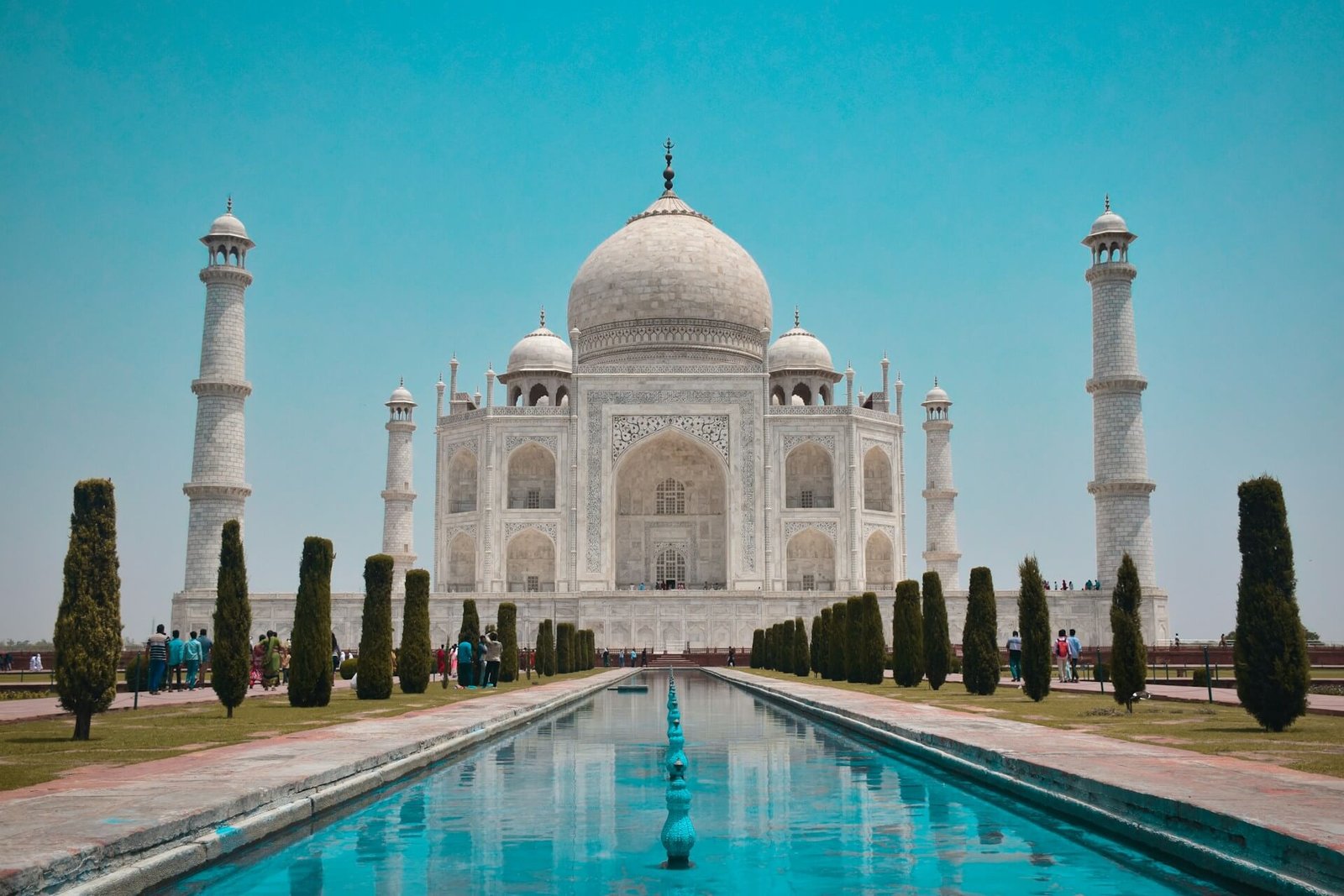
6. Taj Mahal — India
Location: Agra, Uttar Pradesh, India
Type: Mughal-era mausoleum
Best known for: White marble architecture and symmetry
The Taj Mahal is perhaps one of the most recognizable landmarks in India.
It was commissioned by Mughal emperor Shah Jahan in memory of his wife Mumtaz Mahal. UNESCO states that construction began in the 17th century, with the principal mausoleum completed in 1648 and additional parts of the complex completed later.
UNESCOS’s Taj Mahal world Heritage Page
The monument is part of a larger complex that includes the main tomb, mosque, guest house, gateway, gardens, and other structures.
Its design is known for its symmetry, marble work, decorative inlay, and carefully planned relationship between architecture and landscape.
Travel tip
If you’re visiting Agra specifically for the Taj Mahal, give yourself enough time to appreciate the entire complex rather than spending the whole visit trying to get one perfect photograph.
Also check the current official visitor rules, opening arrangements, ticket information, and restrictions before your visit because these can change.
And remember that the Taj Mahal is a protected heritage monument. Follow instructions about where you can walk, what you can carry, and what you can photograph.
If you’re planning a longer trip around the country, explore these family vacation destinations in India for more ideas beyond Agra.
7. Colosseum — Italy
Location: Rome, Italy
Type: Ancient Roman amphitheater
Best known for: Roman architecture and history
The Colosseum is one of the most recognizable surviving structures from ancient Rome.
Built during the Roman imperial period, the amphitheater became a major venue for public spectacles. Today, the structure offers travelers a glimpse into Roman engineering, architecture, and social history.
What makes the Colosseum particularly interesting is that you’re not simply looking at an isolated monument. It sits within a larger historic landscape that includes other important Roman remains.
What should you look for?
During a visit, pay attention to:
- The exterior arches
- The interior seating structure
- The arena
- Underground areas where accessible
- Architectural details
- The relationship between the Colosseum and nearby Roman sites
Travel tip
Rome gets busy, especially during popular travel periods.
Reserve tickets through the appropriate official channels when required, check entry rules before visiting, and give yourself extra time for security and walking between nearby attractions.
If you’re interested in ancient Roman history, consider visiting the surrounding archaeological area rather than treating the Colosseum as a standalone stop.
If you’re planning a longer European trip around historic landmarks, our guide to the countries to visit in Europe can help you compare different destinations.
What Makes These 7 Wonders Different?
Although they share the “New 7 Wonders” label, they aren’t really similar attractions.
| Wonder | Country | Main historical connection | Travel experience |
|---|---|---|---|
| Great Wall of China | China | Chinese dynasties & defense | Hiking, landscapes, history |
| Petra | Jordan | Nabataean civilization | Archaeology & walking |
| Chichén Itzá | Mexico | Maya civilization | Archaeology & architecture |
| Christ the Redeemer | Brazil | Modern Brazilian landmark | Monument & city views |
| Machu Picchu | Peru | Inca civilization | Archaeology & mountain landscape |
| Taj Mahal | India | Mughal architecture | Architecture & gardens |
| Colosseum | Italy | Ancient Rome | Archaeology & urban history |
One important clarification: “New 7 Wonders of the World” is the name of the 2007 New7Wonders campaign. It is not a UNESCO ranking.
UNESCO separately maintains the World Heritage List, which recognizes cultural and natural sites based on specific criteria. Several of these wonders, including the Great Wall, Petra, Machu Picchu, Chichén Itzá, and the Taj Mahal, are UNESCO World Heritage properties.
This distinction is worth keeping in the article because many travel articles incorrectly use the two lists as though they are the same thing.
Visiting famous landmarks also comes with a responsibility to help protect them. Our sustainable travel tips cover simple ways to travel more responsibly.
Ancient Wonders vs. New 7 Wonders
The New 7 Wonders of the World should not be confused with the Seven Wonders of the Ancient World.
The ancient list dates back to the classical world and included sites such as:
- Great Pyramid of Giza
- Hanging Gardens of Babylon
- Statue of Zeus at Olympia
- Temple of Artemis
- Mausoleum at Halicarnassus
- Colossus of Rhodes
- Lighthouse of Alexandria
Only the Great Pyramid of Giza still survives substantially from the traditional ancient list.
The New7Wonders campaign was a much later project. Its seven winners were announced in 2007 after a worldwide public vote. The organization itself states that more than 100 million votes were cast.
So when someone says “the 7 Wonders of the World” today, it’s useful to clarify which list they’re talking about.
Are the 7 Wonders Ranked?
No.
The official New7Wonders announcement specifically presented the seven in random order and stated that there was no ranking among them.
That matters because you will often see websites publishing their own “No. 1” or “best wonder” lists.
Those rankings are opinions, not part of the official New 7 Wonders declaration.
For travelers, it makes more sense to think about what type of experience you’re looking for.
If you enjoy archaeology, Petra or Machu Picchu may appeal to you.
If architecture interests you, the Taj Mahal or Colosseum offers a very different experience.
If you want dramatic landscapes, the Great Wall and Machu Picchu provide something quite different from an urban landmark such as the Colosseum.
Tips for Visiting the World’s Famous Wonders
Visiting a famous landmark doesn’t always mean showing up and buying a ticket.
Some of these sites attract large numbers of visitors and have rules designed to protect historic structures.
1. Check official information first
Ticketing, opening hours, entry routes, visitor limits, and other rules can change.
Use official tourism or heritage websites shortly before your trip.
2. Don’t rely on old travel information
A blog post published several years ago may contain outdated information about tickets, transportation, opening hours, or visitor restrictions.
3. Wear comfortable shoes
Several wonders involve substantial walking, stairs, uneven surfaces, or outdoor exposure.
4. Allow more time than the photo suggests
A landmark can look like a one-hour attraction online but take much longer once transportation, security, walking, and queues are included.
5. Respect the site
Don’t climb restricted structures, touch protected surfaces, ignore barriers, or leave trash behind.
These aren’t just rules designed to inconvenience visitors. They’re part of protecting places that need to survive for future generations.
How to Plan a Trip Around the 7 Wonders
You don’t need to visit all seven on one trip.
In fact, trying to do that would create a complicated itinerary across multiple continents.
A better approach is to choose destinations based on your interests.
For history lovers
Consider combining destinations with strong archaeological and historical connections, such as:
Petra + Rome + Chichén Itzá
For dramatic landscapes
Consider:
Machu Picchu + Great Wall of China
For architecture
Consider:
Taj Mahal + Colosseum + Christ the Redeemer
For a first major international trip
Choose one region and explore it properly instead of trying to collect as many landmarks as possible.
The goal of travel isn’t simply to count destinations.
It’s to actually experience them.
Final Thoughts
The 7 Wonders of the World are interesting for different reasons.
The Great Wall represents centuries of construction and defense across a huge landscape. Petra reveals the sophistication of the Nabataean civilization. Chichén Itzá provides a window into Maya history. Machu Picchu combines Inca engineering with an extraordinary mountain setting.
The Taj Mahal demonstrates the artistic and architectural achievements of the Mughal period, while the Colosseum connects modern visitors with ancient Rome. Christ the Redeemer offers something different again: a modern monument closely tied to the identity and landscape of Rio de Janeiro.
What they have in common isn’t a single type of architecture or historical period.
It’s the fact that each place tells a story worth understanding before you visit.
And that’s probably the best way to approach famous landmarks: don’t just go to see them. Learn why they matter.
FAQ
What are the 7 Wonders of the World?
The New 7 Wonders of the World are the Great Wall of China, Petra, Chichén Itzá, Christ the Redeemer, the Colosseum, Machu Picchu, and the Taj Mahal. They were officially announced in 2007.
Which country has the Taj Mahal?
The Taj Mahal is in Agra, Uttar Pradesh, India. UNESCO recognizes it as a World Heritage property.
Is the Great Wall of China one continuous wall?
No. The Great Wall consists of interconnected and separate defensive structures built during different periods of Chinese history. UNESCO describes it as a complex system of walls, towers, fortifications, passes, and related structures.
Are the 7 Wonders ranked?
No. The official New7Wonders declaration presented them without a ranking.
Is Machu Picchu a UNESCO World Heritage Site?
Yes. The Historic Sanctuary of Machu Picchu is recognized by UNESCO for both its cultural and natural significance.
Are the New 7 Wonders the same as UNESCO World Heritage Sites?
No. They are separate designations. The New7Wonders list came from a worldwide public voting campaign, while UNESCO’s World Heritage designation follows its own selection criteria and processes.