
Best Places in South America to Visit in June: 10 Destinations Worth Considering
June is an interesting month for traveling around South America because the continent does not have one simple travel season.
In Argentina and Chile, June marks the beginning of winter. In the Andes, destinations such as Peru and Bolivia are entering their drier months. Near the equator, places such as Colombia and Ecuador follow different rainfall patterns rather than traditional summer and winter seasons.
That means the best place to visit in June depends on what you want from the trip.
Want mountain scenery and ancient ruins? Peru is a strong choice. Interested in wildlife? Ecuador’s Galápagos Islands enter their cooler season in June. Looking for winter experiences? Parts of Argentina and Chile become more appealing. Prefer cities, food, and culture? Buenos Aires and Cusco offer plenty to do without building your entire trip around outdoor activities.
Here are 10 South American destinations worth considering for a June trip, along with what makes them interesting, what to expect from the weather, and who they are best suited for.
Quick Guide: Where to Go in South America in June
| Destination | Best for | What June offers |
|---|---|---|
| Cusco, Peru | History and hiking | Dry-season conditions and Inti Raymi |
| Machu Picchu, Peru | Ancient sites | Popular dry-season travel period |
| Galápagos Islands, Ecuador | Wildlife | Cooler season and active marine life |
| Quito, Ecuador | Culture and mountains | Equatorial highland travel |
| Buenos Aires, Argentina | Food and city breaks | Beginning of winter |
| Iguazú Falls, Argentina/Brazil | Nature | Cooler conditions and lower humidity |
| Rio de Janeiro, Brazil | Beaches and city life | Mild winter conditions |
| Pantanal, Brazil | Wildlife | Beginning of the drier wildlife season |
| Santiago, Chile | Food, wine and mountains | Start of winter |
| Salta, Argentina | Landscapes and culture | Dry winter conditions in the north |
1. Cusco, Peru
Best for: History, culture, hiking and high-altitude scenery
Cusco is one of the strongest choices for a June trip to South America.
The city sits high in the Andes and serves as an important base for visiting Machu Picchu, the Sacred Valley and other archaeological sites. June falls within Peru’s drier period, which can make outdoor sightseeing and trekking more convenient than during the wetter months.
There is another reason June is particularly interesting here: Inti Raymi, the Festival of the Sun, takes place in Cusco on June 24.
The celebration has deep connections to Inca history and includes ceremonies, performances and cultural events. It is one of the major events on Cusco’s annual calendar.
If you plan to visit specifically for Inti Raymi, don’t treat it like a spontaneous stop. Accommodation and tours can become more difficult to arrange around major events.
What to do in Cusco
- Explore the historic center
- Visit nearby Inca archaeological sites
- Spend time in the Sacred Valley
- Visit local markets and museums
- Plan a trip to Machu Picchu
- Consider a multi-day trek if you’re properly prepared for the altitude
One thing to remember
Cusco is at high elevation.
Give yourself time to adjust rather than arriving and immediately scheduling strenuous hiking. Your experience at altitude can be very different from what you are used to at home.
Peru’s official tourism site also recommends Cusco, Machu Picchu, the Sacred Valley and other Andean experiences as major parts of the country’s cultural and adventure tourism offering.
2. Machu Picchu, Peru
Best for: Ancient history and iconic mountain scenery
Machu Picchu deserves its own place on the list even though many travelers visit it as part of a larger Cusco itinerary.
June falls within the traditional dry season in the Peruvian Andes, making it an attractive period for travelers interested in hiking, archaeological sites and mountain landscapes.
That doesn’t mean you should expect empty trails.
June is part of the popular travel period, so travelers should organize transportation, accommodation and any required trekking arrangements well in advance.
You also don’t need to hike the Inca Trail to visit Machu Picchu.
Travelers can combine Cusco with train transportation and other options depending on their itinerary and preferences.
How to plan a June visit
A practical itinerary might look like:
Days 1–3: Cusco and acclimatization
Days 4–5: Sacred Valley
Day 6: Machu Picchu
Days 7–8: Return to Cusco and additional sightseeing
The exact schedule depends on transportation and whether you want to include a trek.
Why June works
The main advantage is the combination of relatively favorable conditions for outdoor sightseeing and the larger cultural calendar around Cusco.
Just remember that good weather does not automatically mean fewer visitors.
3. Galápagos Islands, Ecuador
Best for: Wildlife, snorkeling and nature
If wildlife is your main reason for visiting South America, the Galápagos Islands are worth considering in June.
Ecuador’s official tourism information describes June through November as the archipelago’s cooler season, influenced by the Humboldt Current. During this period, marine activity can be particularly interesting, making it an appealing time for travelers focused on wildlife and ocean experiences.
The Galápagos are not a typical beach vacation.
The main attraction is the opportunity to observe wildlife and ecosystems that are very different from what you might encounter on a conventional tropical trip.
Depending on your itinerary, you might spend time:
- Snorkeling
- Exploring islands
- Walking designated trails
- Observing sea lions and birds
- Looking for marine life
- Taking guided wildlife excursions
Is June a good month for the Galápagos?
Yes, particularly if your priority is wildlife and marine activity rather than simply hot beach weather.
The trade-off is that the water and air can feel cooler than during the warmer season.
Planning tip
Choose your islands and activities before booking flights.
The Galápagos require more logistical planning than a simple city break, and transportation between islands can affect how much time you actually have for sightseeing.
Ecuador Travel —official Ecuador tourism information including Galápagos seasonal conditions.
4. Quito, Ecuador
Best for: Culture, architecture and mountain landscapes
Quito offers a completely different experience from the Galápagos.
The Ecuadorian capital sits high in the Andes and is a useful starting point for travelers who want a combination of history, food, architecture and mountain scenery.
June can work well if you want to combine Quito with other Ecuadorian destinations rather than spending an entire trip on the coast.
You can explore the historic center, visit museums, experience local food and use the city as a base for excursions into the surrounding Andes.
Why consider Quito in June?
Ecuador doesn’t follow the same four-season pattern as countries farther south.
Climate varies significantly by altitude and region, so a June trip should be planned around the individual destinations you’re visiting rather than assuming the entire country will have the same weather.
That makes Quito a good addition to a broader Ecuador itinerary.
Consider combining Quito with
- Galápagos Islands
- Cotopaxi region
- Ecuadorian Andes
- Amazon region
If you want a trip with several different landscapes, Ecuador can offer a lot without requiring travel across an enormous number of countries.
5. Buenos Aires, Argentina
Best for: Food, culture, nightlife and city breaks
June marks the beginning of winter in Argentina, and Buenos Aires can be a good choice if you prefer city travel over tropical weather.
You won’t need to plan every day around outdoor activities.
Buenos Aires has museums, historic neighborhoods, restaurants, cafés, theaters, tango venues and markets that can fill a several-day itinerary.
The city’s official tourism information highlights areas and experiences including San Telmo, Recoleta, Palermo, the Teatro Colón, the Costanera Sur Ecological Reserve and the city’s famous tango and food culture.
Things to do in Buenos Aires
- Explore San Telmo
- Visit Recoleta Cemetery
- See the Teatro Colón
- Walk around Palermo
- Explore local cafés
- Try Argentine food
- Attend a tango performance
- Visit museums
- Spend time around the city’s historic neighborhoods
Is Buenos Aires cold in June?
It is winter, so pack layers and expect cooler conditions than you would experience during Argentina’s summer.
The advantage is that Buenos Aires remains a year-round city destination.
If you prefer restaurants, museums and cultural experiences to hot weather, June can make sense.
6. Iguazú Falls, Argentina and Brazil
Best for: Waterfalls, rainforest and nature
Iguazú Falls sits on the border between Argentina and Brazil, making it possible to experience one of South America’s major natural attractions from both sides.
June is the beginning of winter in the Southern Hemisphere.
Argentina’s tourism authority specifically highlights Iguazú National Park as a recommended winter destination, noting that conditions are generally more comfortable for walking than during the hotter and more humid summer period.
The Brazilian side also notes that the winter months are drier and that the lower river level can make individual waterfalls more defined.
What to do
- Walk the trails and viewpoints
- Visit the Devil’s Throat area
- Explore the rainforest
- Take a boat excursion if operating conditions allow
- Visit both the Argentine and Brazilian sides if your itinerary and entry requirements permit
How long should you stay?
For many travelers, 2–3 days works well when combining the falls with both sides of the border.
Remember that crossing an international border requires the appropriate travel documents and entry requirements for your nationality.
Don’t assume that because you can enter one country, you automatically have the same requirements for the other.
7. Rio de Janeiro, Brazil
Best for: Beaches, city sightseeing and Brazilian culture
Rio de Janeiro enters its winter season in June, but that doesn’t mean the city shuts down.
The weather is generally milder than during the peak summer period, which can be useful if you want to combine sightseeing with time outdoors.
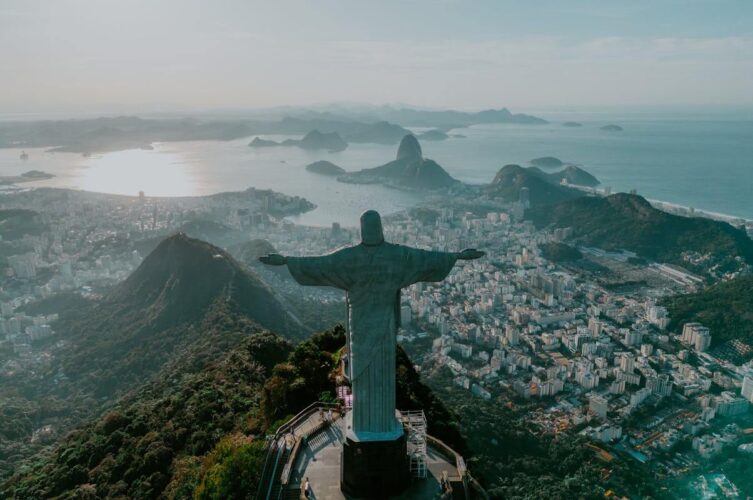
You can still visit famous beaches, explore neighborhoods, take in views from Sugarloaf Mountain and visit Christ the Redeemer.
Rio also has a strong cultural calendar around June, including traditional Festas Juninas, which are celebrated in many parts of Brazil.
What to do in Rio
- Visit Christ the Redeemer
- Take the cable car to Sugarloaf Mountain
- Explore Copacabana and Ipanema
- Walk through different neighborhoods
- Try Brazilian food
- Look for local June celebrations
- Visit museums and cultural attractions
Is Rio worth visiting in June?
It can be, particularly if you want a combination of city experiences, scenery and Brazilian culture without the intensity of the summer travel season.
However, if your priority is guaranteed hot beach weather, June may not be your ideal month.
8. Pantanal, Brazil
Best for: Wildlife and photography
The Pantanal is one of the most interesting choices for travelers who want a wildlife-focused trip.
Brazil’s official tourism information describes the Pantanal as one of the world’s major wetland ecosystems and highlights wildlife including jaguars, capybaras, caimans, tapirs and numerous bird species.
June falls near the beginning of the region’s drier period.
That makes it worth considering for travelers interested in wildlife observation, although exact conditions vary by location and year.
What can you do in the Pantanal?
Depending on the area and lodge you choose, activities can include:
- Wildlife drives
- Boat trips
- Guided walks
- Horseback riding
- Photography
- Birdwatching
This is not the same kind of trip as visiting Rio or Buenos Aires.
You’ll generally spend more time in nature and less time moving between conventional tourist attractions.
Who should visit?
The Pantanal is particularly appealing if you enjoy:
- Wildlife
- Photography
- Nature
- Birdwatching
- Remote landscapes
If you’re looking for nightlife, shopping or museums, choose a major city instead.
Visit Brasil — Current climate information and official Pantanal/Iguaçu information.
9. Santiago, Chile
Best for: Food, wine, city sightseeing and winter activities
June marks the beginning of winter in Chile.
Santiago can work well as a base if you want to combine city sightseeing with the Andes.
Chile’s official tourism site highlights Santiago, Valparaíso and the country’s wine valleys among its major destinations, while the Andes provide access to mountain experiences.
For travelers interested in winter sports, June can also be the beginning of the ski season in some mountain areas, although exact opening dates depend on snow conditions.
Things to do around Santiago
- Explore central Santiago
- Visit museums and cultural attractions
- Take a day trip toward the wine valleys
- Explore nearby mountain areas
- Visit Valparaíso as part of a longer itinerary
- Try Chilean food and wine
A practical June tip
Pack for changing conditions.
A city day and a mountain excursion can require completely different clothing.
Don’t assume that one jacket and one pair of shoes will work equally well for every part of your itinerary.
Chile Travel — Official Chile tourism information for Santiago, Atacama, Patagonia and mountain experiences.
10. Salta, Argentina
Best for: Landscapes, culture and northern Argentina
Salta is an excellent alternative if you want to experience Argentina but don’t necessarily want a cold-weather Patagonia itinerary.
Northern Argentina has a different climate from the country’s far south.
June is part of the cooler, drier period in much of the region, making it a practical time to explore landscapes around Salta and Jujuy.
You can use Salta as a base for exploring:
- Quebrada de Humahuaca
- Cafayate
- Mountain landscapes
- High-altitude scenery
- Historic towns
- Local food and regional culture
Argentina’s tourism authority also highlights Salta and Jujuy as northern destinations that can be particularly appealing during the winter season.
Why choose Salta over Patagonia?
Because the experience is completely different.
Patagonia is about dramatic southern landscapes, glaciers, mountains and cold-weather travel.
Salta and Jujuy offer colorful rock formations, high-altitude landscapes, regional food, colonial architecture and Andean cultural influences.
If you’re visiting Argentina for the first time, your choice should depend on the type of trip you actually want rather than simply choosing the most famous destination.
Best South American Destinations in June by Travel Style
There isn’t one winner for everyone.
Best for ancient history
Cusco and Machu Picchu, Peru
June’s drier conditions and Cusco’s June cultural calendar make this a strong option for travelers interested in history and trekking.
Best for wildlife
Galápagos Islands, Ecuador
June begins the cooler season, with increased marine activity making it appealing for wildlife-focused trips.
Best for a city vacation
Buenos Aires, Argentina
If you enjoy restaurants, architecture, museums, tango and nightlife, the cooler weather doesn’t have to be a disadvantage.
Best for waterfalls
Iguazú Falls
June offers a useful combination of cooler conditions and lower humidity compared with the warmer months.
Best for wildlife photography
Pantanal, Brazil
The beginning of the drier season makes the Pantanal an interesting choice for travelers focused on wildlife.
Best for winter activities
Santiago and the Chilean Andes
June is the beginning of winter, so mountain areas become more relevant for travelers looking for snow and winter experiences.
Best for northern Argentina
Salta and Jujuy
The cooler, drier season can be a good time for exploring the region’s landscapes and high-altitude destinations.
Is June a Good Time to Visit South America?
Yes, but you need to choose your destination carefully.
June is not one universal “best month” for the entire continent.
The Andes, southern countries and tropical regions can have completely different conditions at the same time.
For example:
- Peru: June falls within the dry season in the Andes.
- Bolivia: June is generally within the drier period.
- Argentina: June begins winter.
- Chile: June begins winter.
- Brazil: June begins winter, although conditions vary dramatically by region.
- Colombia: weather depends heavily on region and altitude rather than four traditional seasons.
- Ecuador: conditions vary significantly between the coast, Andes, Amazon and Galápagos.
This is why a destination-specific weather check is more useful than looking for one “South America weather” forecast.
What to Pack for South America in June
Your packing list should depend on your itinerary.
Someone visiting Rio and Cartagena needs very different clothing from someone hiking around Cusco or visiting Patagonia.
For a multi-region trip, layers are the safest approach.
Basic packing list
- Comfortable walking shoes
- Lightweight shirts
- Warm layer or sweater
- Waterproof jacket
- Comfortable pants
- Sun protection
- Sunglasses
- Small daypack
- Reusable water bottle
- Travel documents
- Copies of important documents
- Phone and charger
- Power bank
- Any required medication
If you’re visiting high-altitude destinations such as Cusco, don’t pack only for the daytime temperature. Nights can be considerably colder.
If you’re combining tropical and high-altitude destinations, plan your luggage around both environments.
For a more complete international packing list, see our International Travel Packing Checklist
How Long Do You Need for a South America Trip in June?
This depends heavily on how many countries you want to visit.
South America is enormous, and trying to combine too many destinations into a short trip can leave you spending more time in airports than actually experiencing places.
Choosing fewer destinations can also make it easier to manage transportation and accommodation costs. For more practical ideas, read our guide on How to Travel on a Budget Without Sacrificing the Experience.
One week
Choose one main destination.
Examples:
- Cusco + Machu Picchu
- Buenos Aires
- Rio de Janeiro
- Quito + surrounding areas
10–14 days
You can reasonably combine two nearby or well-connected destinations.
Examples:
- Cusco + Machu Picchu + Sacred Valley
- Buenos Aires + Iguazú Falls
- Quito + Galápagos
- Santiago + nearby wine/mountain areas
Three weeks or more
You have more flexibility to combine countries, but you’ll still need to account for long travel times.
A trip covering Peru, Argentina, Brazil and Chile can look impressive on paper but become exhausting if every few days involves a long flight.
For first-time visitors, it is usually better to experience fewer places properly than to collect passport stamps.
For broader country ideas, see our guide to 10 South American Countries to Visit for Different Travel Styles.
South America Travel Planning Tips for June
1. Check altitude before booking activities
Cusco, Quito and other Andean destinations can be physically demanding because of elevation.
Don’t schedule your hardest hike for your first day.
2. Check the weather by region
Country-level weather summaries can be misleading.
Brazil, Argentina and Chile are all large countries with significant regional differences.
3. Book popular experiences early
Machu Picchu, Galápagos cruises, major trekking routes and popular wildlife lodges can require advance planning.
4. Leave room between major activities
Flights can be delayed, weather can change, and mountain transportation doesn’t always work like a city subway.
Avoid building an itinerary where one delay ruins the rest of your trip.
Travel planning apps can also help you organize flight details, check routes, manage bookings and keep important trip information in one place. See our guide to the 7 Best Travel Apps for International Travel in 2026.
5. Check official entry requirements
Visa and entry rules depend on your nationality and destination.
Check official government or tourism sources close to departure instead of relying on an old travel article.
6. Don’t try to cover the entire continent
South America rewards slower travel.
Choose a region and explore it properly rather than trying to see six countries in two weeks.
A Sample 14-Day South America Trip for June
If you want a practical example, here is one way to structure a June trip:
Days 1–3: Cusco
Spend your first days exploring the city and adjusting to the altitude.
Days 4–5: Sacred Valley
Explore the valley and nearby archaeological sites.
Day 6: Machu Picchu
Spend the day visiting Machu Picchu and return according to your transportation plan.
Days 7–8: Cusco
Keep these days flexible for additional sightseeing, rest or cultural experiences.
Days 9–11: Lima
Enjoy Peruvian food, museums and the city’s coastal neighborhoods.
Days 12–14: Buffer / return travel
Keep some flexibility rather than scheduling another major destination immediately before your international flight.
This is only an example. If your main goal is wildlife, beaches or winter sports, a completely different itinerary would make more sense.
South America in June: Pros and Cons
Advantages
- Dry-season conditions in many Andean destinations
- Excellent time for some hiking and archaeological trips
- Winter experiences begin in Argentina and Chile
- Interesting wildlife opportunities
- Fewer extreme summer conditions in some destinations
- Major cultural events such as Inti Raymi in Cusco
Potential drawbacks
- Popular destinations can still be busy
- Southern destinations can be cold
- Weather varies significantly between regions
- High-altitude travel requires preparation
- Long distances make rushed itineraries tiring
- Some destinations have different conditions from what you may expect based on their latitude alone
Frequently Asked Questions
Is June a good month to visit South America?
Yes, but it depends on where you go. June is particularly useful for parts of the Andes and for winter destinations in Argentina and Chile. Tropical destinations have their own rainfall patterns, so research each region separately.
What is the best country in South America to visit in June?
There isn’t one universal answer. Peru is a strong choice for history and hiking, Ecuador for wildlife, Argentina for cities and northern landscapes, Brazil for wildlife and selected winter destinations, and Chile for mountain and winter experiences.
Is June a good time to visit Machu Picchu?
June falls within the drier period in the Peruvian Andes and is a popular time for visiting Machu Picchu. Because demand can be high, organize transportation and required reservations before traveling.
Is June winter in South America?
June is winter in the Southern Hemisphere countries such as Argentina and Chile. However, South America also includes equatorial and tropical regions where the traditional four-season model does not apply in the same way.
Is June good for the Galápagos Islands?
June begins the cooler season in the Galápagos. Ecuador’s tourism information notes increased marine activity during this period, making it appealing for wildlife-focused travelers.
Is Patagonia worth visiting in June?
It can be, particularly if you’re interested in winter landscapes and cold-weather experiences. However, Patagonia is a large region and conditions can be challenging, so check individual destinations, transportation and seasonal operating schedules before planning a trip.
What should I pack for South America in June?
Pack according to your destinations. Layers are especially useful if you’re combining high-altitude, tropical and southern regions. Comfortable walking shoes, a warm layer, weather protection and sun protection are good starting points.
How many countries should I visit in two weeks?
For most travelers, two or perhaps three destinations is more realistic than trying to cover a large portion of the continent. Long distances and flight connections can take a significant amount of time.
Final Thoughts
June can be a very good month for South America, but the key is choosing the right region for the type of trip you want.
If you’re interested in ancient history and mountain scenery, look toward Peru.
If wildlife is your priority, consider the Galápagos or Pantanal.
If you want food, culture and city life, Buenos Aires is worth considering.
For waterfalls and rainforest, Iguazú is a strong option.
And if winter experiences are what you’re after, Chile and southern Argentina become much more interesting as the season begins.
Instead of asking, “Is June a good month for South America?” ask a more useful question:
“Which part of South America fits the kind of trip I want to take in June?”
That approach will give you a much better trip — and a much more realistic itinerary.