

10 Best Places to Visit in Switzerland for First-Time Travelers
Switzerland is one of those countries where the journey can be almost as memorable as the destination.
You can spend one day walking through a historic old town, the next riding a train through the Alps, and another sitting beside a lake surrounded by mountains. The challenge is not finding places to visit. It is deciding which ones actually fit your trip.
For a first visit, it helps to avoid trying to see the entire country in a few days. Switzerland may look small on a map, but mountain regions, lakes and train connections can make travel times longer than expected.
This guide covers 10 of the best places to visit in Switzerland, with a focus on what each destination offers, who it suits, how long to stay, and how to include it in a practical itinerary.
If you’re still deciding where to travel in Europe, you may also want to read our guide to 12 Countries to Visit in Europe: Where to Go Based on Your Travel Style.
1. Lucerne
Best for: First-time visitors, lakes, historic streets, mountain excursions
Recommended stay: 2–3 days
Lucerne is one of the easiest places to fall in love with on a first trip to Switzerland.
The city sits on Lake Lucerne with mountains surrounding it, while its compact historic center makes it easy to explore without spending hours getting from one attraction to another.
The city’s most recognizable landmark is Chapel Bridge, a covered wooden bridge crossing the Reuss River. From there, you can walk through the Old Town, see the Lion Monument and explore the waterfront.
Switzerland Tourism’s Lucerne guide
Things to do in Lucerne
- Walk across Chapel Bridge
- Explore Lucerne’s Old Town
- See the Lion Monument
- Walk along Lake Lucerne
- Visit the Swiss Museum of Transport
- Take a boat trip on the lake
- Take a mountain excursion to Mount Pilatus or Mount Rigi
Lucerne also works well as a base for exploring the surrounding region. Lake Lucerne can be combined with mountain trips to Rigi, Pilatus and other nearby destinations.
Travel tip: If your Switzerland trip is only a week long, Lucerne is a useful stop because it combines a city experience with easy access to lakes and mountains.
2. Interlaken
Best for: Adventure, mountain scenery and outdoor activities
Recommended stay: 2–3 days
Interlaken is located between Lake Thun and Lake Brienz in the Bernese Oberland. It is particularly useful for travelers who want to explore the surrounding mountain region rather than simply stay in one town.
The town itself is relatively easy to explore, but the real appeal is what lies around it.
From Interlaken, you can travel toward places such as Lauterbrunnen, Grindelwald and the Jungfrau region.
Switzerland Tourism’s Interlaken guide
Things to do around Interlaken
- Walk around the town center
- Visit Höhematte
- Take a trip up Harder Kulm
- Explore Lake Thun
- Explore Lake Brienz
- Visit Lauterbrunnen
- Visit Grindelwald
- Try activities such as rafting or paragliding
Interlaken is also known for adventure activities, including paragliding, rafting, canyoning and other outdoor experiences.
Travel tip: Don’t treat Interlaken as just another city stop. Its biggest advantage is its location. Staying here gives you access to several major Alpine destinations without changing hotels every night.
3. Zermatt and the Matterhorn
Best for: Iconic Alpine scenery, hiking and mountain experiences
Recommended stay: 2–3 days
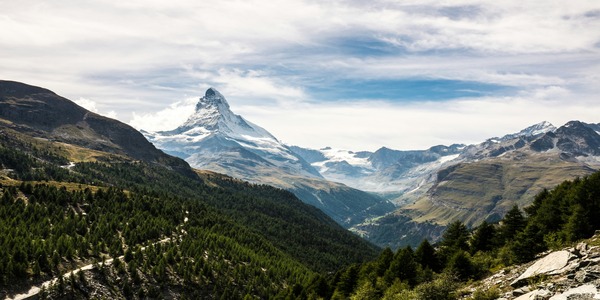
If there is one Swiss mountain that most international travelers recognize, it is probably the Matterhorn.
The mountain rises above Zermatt and reaches 4,478 meters. You can see it from several points around the area without needing to attempt a serious mountain climb.
Zermatt itself is a mountain village in the canton of Valais and is car-free, which gives the destination a very different feel from larger Swiss cities.
Things to do in Zermatt
- See the Matterhorn from the village
- Take the train to Gornergrat
- Visit Matterhorn Glacier Paradise
- Walk one of the area’s hiking trails
- Explore the village streets
- Visit the Matterhorn Museum
- Try winter sports during the appropriate season
Gornergrat is particularly popular for views of the Matterhorn and surrounding Alps. The area also has hiking routes such as the Five Lakes Trail.
Travel tip: Zermatt can be expensive, so compare accommodation options before booking. If your budget is limited, consider staying outside the most expensive central areas and checking transportation carefully.
4. Zurich
Best for: City breaks, food, shopping and international connections
Recommended stay: 1–2 days
Zurich is Switzerland’s largest city and an important transport hub, making it a convenient starting or ending point for many international trips.
It is also worth more than simply using the city as an airport stop.
You can explore the Old Town, walk along the Limmat River, visit museums and spend time around Lake Zurich.
For travelers who prefer a mix of city life and easy access to nature, Zurich can work particularly well.
Things to do in Zurich
- Explore the Old Town
- Walk along the Limmat River
- Visit Bahnhofstrasse
- Spend time around Lake Zurich
- Visit museums and galleries
- Try Swiss food and chocolate
- Take a short excursion outside the city
Travel tip: Zurich is useful at the beginning or end of a Switzerland itinerary because its transport connections make it relatively easy to continue toward other parts of the country.
If you’re planning a couples’ getaway, our guide to romantic cities in Europe for couples offers more ideas for a memorable European trip.
5. Geneva
Best for: Lake views, international culture and western Switzerland
Recommended stay: 1–2 days
Geneva sits at the western end of Lake Geneva near the French border.
It has a different atmosphere from destinations such as Lucerne and Interlaken. Instead of being primarily an Alpine resort, Geneva offers a combination of lakeside scenery, museums, international institutions and city life.
The city’s waterfront is one of the main places to explore, while the Old Town offers historic streets and architecture.
Things to do in Geneva
- Walk around Lake Geneva
- See the Jet d’Eau
- Explore the Old Town
- Visit St. Pierre Cathedral
- Visit museums
- Explore international organizations and their visitor attractions
- Take a boat trip on the lake
Geneva can also be a useful base for exploring parts of the Lake Geneva region.
Travel tip: If you are planning a longer Switzerland trip, Geneva works particularly well as either your starting point or your final stop, especially if you are continuing into France.
6. Bern
Best for: History, architecture and a slower city experience
Recommended stay: 1–2 days
Bern is Switzerland’s federal city and is known for its historic center, medieval streets and distinctive architecture.
It is a good choice if you want to experience Switzerland beyond lakes and mountain resorts.
The Old Town is the main attraction. You can spend several hours walking through its streets, looking at historic buildings, fountains and arcades.
Things to do in Bern
- Explore the Old Town
- See the Zytglogge clock tower
- Visit the Federal Palace
- Walk along the Aare River
- Visit the Bern Minster
- Explore local museums
- See the city’s famous bear-related landmarks
Bern also makes a useful stop between other destinations in central Switzerland.
Travel tip: You don’t need several days to experience the main sights. One full day can work if Bern is part of a longer Switzerland itinerary.
7. The Jungfrau Region: Lauterbrunnen and Grindelwald
Best for: Alpine landscapes, hiking and mountain villages
Recommended stay: 2–4 days
The Jungfrau Region deserves its own section because it includes several destinations that are often treated as separate day trips.
Two of the most recognizable are Lauterbrunnen and Grindelwald.
Lauterbrunnen sits in a dramatic valley surrounded by steep rock walls and waterfalls. The official regional tourism site describes it as a starting point for numerous excursions, including routes toward Mürren and the surrounding mountains.
Grindelwald sits beneath the Eiger and is another popular base for exploring the region. From here, travelers can access attractions such as First and Jungfraujoch.
Things to do in the Jungfrau Region
- Walk through Lauterbrunnen Valley
- See Staubbach Falls
- Visit Grindelwald
- Take the Eiger Express toward Jungfraujoch
- Explore First
- Hike during suitable weather
- Visit Wengen or Mürren
- Take mountain trains and cable cars
Jungfraujoch is one of the region’s major attractions, while Grindelwald-First offers activities including the First Cliff Walk and other mountain experiences.
Official Jungfrau Region travel information
Travel tip: Don’t try to squeeze every village and mountain attraction into one day. Weather can change quickly in the Alps, and transportation between mountain destinations takes time.
8. Montreux
Best for: Lake Geneva, vineyards, music and relaxed sightseeing
Recommended stay: 1–2 days
Montreux sits along the shores of Lake Geneva and offers a very different experience from the high-altitude destinations in the Swiss Alps.
The lakeside setting is the main attraction. You can walk along the waterfront, explore the surrounding area and use Montreux as a base for nearby excursions.
One of the region’s major attractions is Chillon Castle, which sits on the shores of Lake Geneva.
Montreux is also associated with its long-running music tradition and the famous Montreux Jazz Festival.
Things to do in Montreux
- Walk along the lakefront
- Visit Chillon Castle
- Explore the old town
- Take a boat ride on Lake Geneva
- Explore the Lavaux vineyards
- Enjoy views of the lake and mountains
- Visit during the Montreux Jazz Festival if your dates coincide
Travel tip: Montreux is especially useful if your Switzerland itinerary includes Geneva and the Lake Geneva region.
9. St. Moritz
Best for: Alpine resorts, skiing, hiking and the Engadin landscape
Recommended stay: 2–3 days
St. Moritz is one of Switzerland’s best-known mountain resorts and is located in the Engadin region of southeastern Switzerland.
It is particularly associated with winter sports, but the destination is not limited to winter.
During warmer months, the surrounding mountains and lakes offer opportunities for hiking, cycling and other outdoor activities.
Things to do in St. Moritz
- Explore Lake St. Moritz
- Walk around the town
- Enjoy mountain viewpoints
- Go hiking in summer
- Try winter sports during the snow season
- Explore the wider Engadin valley
- Consider scenic train travel through Graubünden
St. Moritz makes the most sense for travelers who have enough time to explore southeastern Switzerland rather than trying to add it to a very short itinerary.
Travel tip: The journey itself can be part of the experience. If you have time, look into scenic rail routes through the Swiss Alps instead of treating every train ride simply as transportation.
10. Lugano
Best for: Lakes, warmer weather, Italian influence and southern Switzerland
Recommended stay: 1–2 days
Lugano sits in Switzerland’s Italian-speaking canton of Ticino near the Italian border.
The atmosphere here is noticeably different from places such as Zurich, Bern or Lucerne. Italian influence can be seen in the language, architecture, food and general character of the region.
Lake Lugano provides the main setting for the city, while nearby mountains offer viewpoints over the lake and surrounding landscape.
Things to do in Lugano
- Walk along Lake Lugano
- Explore the city center
- Visit Piazza della Riforma
- Take a boat trip
- Visit Parco Ciani
- Go up Monte Brè or Monte San Salvatore
- Explore nearby Ticino villages
Lugano can also be combined with a wider southern Switzerland itinerary.
Travel tip: If you are already traveling between central Switzerland and northern Italy, Lugano can make a convenient stop rather than requiring a separate trip.
How to Choose the Right Places in Switzerland
You do not need to visit all 10 destinations.
Your choices should depend on what kind of trip you want.
If this is your first Switzerland trip
Consider:
Zurich → Lucerne → Interlaken/Jungfrau Region → Zermatt
This gives you a combination of city sightseeing, lakes, mountain villages and the Matterhorn.
If you want mostly mountains
Consider:
Interlaken → Lauterbrunnen → Grindelwald → Zermatt
This itinerary gives you more time in Alpine areas instead of moving between several cities.
If you prefer cities and culture
Consider:
Zurich → Bern → Geneva → Lucerne
You can still add mountain excursions without making the entire trip about hiking or skiing.
If you want a slower trip
Choose fewer destinations and stay longer.
For example:
Lucerne → Jungfrau Region → Zermatt
Three main bases can be much easier to manage than changing hotels every night.
How Many Days Do You Need in Switzerland?
The ideal length depends on how much of the country you want to see.
4–5 days
Choose two main destinations.
For example:
Zurich + Lucerne
or
Lucerne + Interlaken
7 days
You can comfortably combine three major areas.
For example:
Zurich → Lucerne → Interlaken/Jungfrau Region
10–14 days
A longer trip allows you to add destinations such as:
- Zermatt
- Geneva
- Montreux
- Bern
- Lugano
- St. Moritz
The biggest mistake is trying to cover too much ground simply because Switzerland has excellent transportation.
You still need time to actually enjoy each destination.
Getting Around Switzerland
For most visitors, trains are one of the easiest ways to travel around Switzerland.
The country’s public transportation network connects cities, towns and many mountain destinations.
The Swiss Travel Pass provides unlimited travel by train, bus and boat for selected consecutive days and also includes public transportation in more than 90 towns and cities. It also provides museum access and discounts on many mountain excursions.
Check the current Swiss Travel Pass options on Switzerland Tourism
However, don’t automatically assume a pass is the cheapest option.
Compare the pass price with the individual journeys you actually plan to take.
For help with navigation, bookings, and other travel tasks, check out our guide to the best travel apps for international travel.
For shorter trips with only a few long train journeys, point-to-point tickets may make more sense. For travelers moving around the country frequently, a rail pass can be more convenient.
When Is the Best Time to Visit Switzerland?
There is no single best month for every type of Switzerland trip.
Your ideal travel period depends on what you want to do.
Spring
Spring can be a good time for city sightseeing and lower-season travel, but higher mountain areas may still have snow and some mountain activities can operate on seasonal schedules.
Summer
Summer is popular for hiking, lake activities and mountain excursions.
The downside is that major destinations can become busy, particularly during peak travel periods.
Fall
Fall brings cooler temperatures and changing colors in many areas.
It can be a pleasant time for city trips and scenic travel, although mountain weather becomes increasingly important to check.
Winter
Winter is the season for skiing, snowboarding and snowy Alpine scenery.
Mountain resorts such as Zermatt and St. Moritz are especially associated with winter travel.
Before booking mountain excursions, always check current operating dates, weather and transportation schedules.
Is Switzerland Expensive?
Switzerland can be expensive compared with many other European destinations, particularly when it comes to accommodation, restaurants and mountain excursions.
That doesn’t mean you have to spend a huge amount every day.
A few practical choices can help.
Ways to control your budget
- Compare accommodation prices before booking
- Stay slightly outside the most expensive tourist centers
- Use supermarkets for some meals
- Take advantage of free walking routes and public spaces
- Compare individual train tickets with travel passes
- Avoid paying for every mountain excursion
- Book important transportation and accommodation ahead when appropriate
For more practical money-saving ideas, see our guide on How to Travel on a Budget Without Sacrificing the Experience.
You can also find more advice in our International Travel Packing Checklist before your trip.
Switzerland Travel Tips for First-Time Visitors
Don’t plan too many destinations
Switzerland’s transportation system makes it tempting to add another city or mountain to your itinerary.
Resist that temptation when possible.
Three well-planned destinations can be more enjoyable than six rushed stops.
Choosing fewer stops can also make your trip more thoughtful and less rushed. See our practical sustainable travel tips for more ways to travel responsibly.
Check mountain weather separately
The weather in a city can be completely different from conditions at a mountain summit.
If you’re planning a cable-car trip or hike, check the conditions for that specific location.
Book popular accommodation early
Prices and availability can change significantly during busy travel periods.
This is particularly important in mountain resorts and popular summer destinations.
Wear comfortable shoes
Even if you’re not planning major hikes, you’ll probably walk more than you expect.
Old Town streets, train stations, waterfronts and mountain villages can add up to a lot of walking.
Don’t forget travel insurance
Medical treatment and unexpected travel problems can become expensive.
Make sure your insurance covers the activities you plan to do, particularly if you’re skiing, hiking at altitude or participating in adventure sports.
Pack according to the season
Switzerland can have very different conditions depending on altitude and time of year.
A summer city trip and a winter mountain vacation require completely different packing strategies.
What to Pack for Switzerland
Your packing list will depend heavily on the season.
For most trips, useful items include:
- Comfortable walking shoes
- Light layers
- Weather-resistant jacket
- Small daypack
- Reusable water bottle
- Phone charger and power bank
- Sunglasses
- Basic medication
- Travel documents
- Travel insurance details
- Offline maps
- Appropriate clothing for mountain excursions
For a more detailed international packing list, see our International Travel Packing Checklist.
If you’re planning a Switzerland road trip instead of relying mainly on trains, our Road Trip Planning Checklist can help you prepare your vehicle, route and emergency supplies.
A Sample 10-Day Switzerland Itinerary
If you want to see several different sides of Switzerland without changing hotels every night, a simple itinerary could look like this:
Days 1–2: Zurich
Explore the Old Town, Lake Zurich and the city center.
Days 3–4: Lucerne
Explore Chapel Bridge and the Old Town, then take a lake or mountain excursion.
Days 5–7: Interlaken and Jungfrau Region
Use Interlaken as a base and explore Lauterbrunnen, Grindelwald and nearby mountain destinations.
Days 8–9: Zermatt
Travel to Zermatt and spend time exploring the village and Matterhorn viewpoints.
Day 10: Zurich or Geneva
Depending on your flight, return to Zurich or continue toward Geneva.
This is only one possible route. If you prefer a slower trip, remove one destination and spend the extra nights exploring the surrounding region.
Switzerland Travel Mistakes to Avoid
Trying to see everything
Switzerland rewards slow travel. Don’t turn your vacation into a checklist of train stations.
Booking accommodation based only on price
A cheaper hotel can sometimes mean longer transportation times or more complicated connections.
Look at the location before comparing prices.
Ignoring seasonal schedules
Mountain railways, cable cars and attractions can operate different schedules depending on the season.
Always check current information before making a day trip.
Assuming every mountain trip is included in your rail pass
Travel passes provide different benefits depending on the service and destination.
Check the specific excursion before assuming it is fully covered.
Overpacking
You may be changing trains and moving between hotels several times.
A lighter suitcase makes that process much easier.
Final Thoughts
Switzerland is not a destination where you need to rush from one famous viewpoint to another.
The country works best when you give yourself enough time to enjoy the places between the major attractions.
Spend a morning walking around Lucerne, take a train into the mountains, sit beside a lake in the afternoon or simply enjoy a quiet evening in a small Alpine town.
For a first trip, Lucerne, Interlaken and the Jungfrau Region, and Zermatt provide a strong mix of lakes, mountains and classic Swiss scenery. Zurich, Bern, Geneva, Montreux, St. Moritz and Lugano can then be added depending on your interests, route and available time.
If you’re still choosing destinations for future trips, explore our bucket list travel destinations compared by budget and travel style for ideas beyond Switzerland.
The goal isn’t to visit every famous place.
It is to build an itinerary that gives you enough time to actually experience Switzerland.
Frequently Asked Questions
What are the best places to visit in Switzerland for first-time travelers?
Lucerne, Interlaken, the Jungfrau Region and Zermatt are popular choices for a first trip because they combine historic towns, lakes, mountain scenery and easy access to Alpine attractions.
How many days are enough for Switzerland?
A 7-day trip can give you a good introduction to Switzerland if you focus on a few destinations. With 10–14 days, you can travel at a slower pace and add places such as Zermatt, Geneva, Montreux or Lugano.
Is Switzerland expensive to visit?
Switzerland can be expensive, particularly for accommodation, restaurants and mountain excursions. Planning transportation carefully, comparing accommodation and using supermarkets for some meals can help control costs.
Is it better to travel around Switzerland by train or car?
For many first-time visitors, trains are convenient because major cities and many tourist destinations are well connected by public transportation. A car can be useful for certain rural areas and road-trip itineraries, but it is not necessary for every Switzerland trip.
Is the Swiss Travel Pass worth it?
It depends on your itinerary. The pass includes unlimited travel on covered trains, buses and boats for selected days and offers additional benefits, but you should compare its price with the individual tickets you actually need.
What is the best month to visit Switzerland?
There isn’t one best month for every traveler. Summer is useful for hiking and outdoor activities, winter is popular for snow sports, and spring and fall can work well for travelers who prefer cooler conditions and a different seasonal atmosphere.
Can I visit Switzerland on a budget?
Yes, although Switzerland is not generally a low-cost destination. Choosing accommodation carefully, limiting expensive mountain excursions, using public transportation strategically and preparing some meals yourself can make the trip more manageable.

[…] more destination-specific planning, see our guide to the best places to visit in Switzerland before deciding which regions to include in your […]